Home / Guides
Best golf glove: which material and price band fits your game
The best golf glove depends on how often you play and how much premium feel matters: a leather/polyurethane blend like the FootJoy WeatherSof is plenty for casual rounds, grain leather like the Callaway Opti Fit splits the difference, and pure cabretta (FootJoy Pure Touch or TaylorMade Tour Preferred) pays off if you play 2+ rounds a week.
A golf glove does one job: give you a consistent, slip-free grip on the club through the swing. Without one, sweat and friction turn a 4-hour round into a blister festival by the back nine — and a compromised grip is the fastest way to lose control of the clubface at impact. The question is how much glove you need, and the answer is almost entirely about material and how often you play.
The budget band is the synthetic-blend glove — a mix of leather and polyurethane with a stretch-mesh back for breathability. The FootJoy WeatherSof uses FiberSof, a proprietary leather/PU composite that stays tacky through the round without hardening or shrinking after a few wears. It's not the softest feel against your hand, but it grips reliably and survives 20–25 rounds before the PU starts to stiffen. If you play once a week or less, this is the band that makes sense: it fits the job without fitting the price tag of premium leather.
The mid-range band is full grain leather — genuine leather throughout the palm and fingers, not a blend. The Callaway Opti Fit uses full grain leather with an Opti Fit adjustable closure and perforated back for breathability. It's more supple against the skin than a synthetic blend, and it lasts longer without hardening. The trade-off against the budget tier is real but modest: you feel the difference on the first swing, but for the casual player the WeatherSof's grip consistency isn't far behind. What the Opti Fit buys you is durability across a longer session and a glove that doesn't need replacing as quickly.
The premium band is pure cabretta leather — the gold standard of golf glove materials. Cabretta is a thin, dense goatskin that breathes naturally, resists stretching even when wet, and provides the maximum tack against a gripped club without feeling sticky or rubbery. Two models sit here with slightly different approaches: the FootJoy Pure Touch Limited is classic 100% select cabretta with a tailored fit and minimal stitching — pure, traditional feel. The TaylorMade Tour Preferred uses AAA Cabretta Soft Tech leather with added perforation zones for airflow and a 4-way nylon stretch insert on the wrist for a closer fit. Both deliver the same core benefit: grip that stays consistent through 40+ rounds if cared for properly. The Tour Preferred adds tech features (antimicrobial finish, moisture-wicking wristband) at a comparable outlay, so the choice between them comes down to whether you want traditional simplicity (Pure Touch) or modern features (Tour Preferred).
Our picks
01
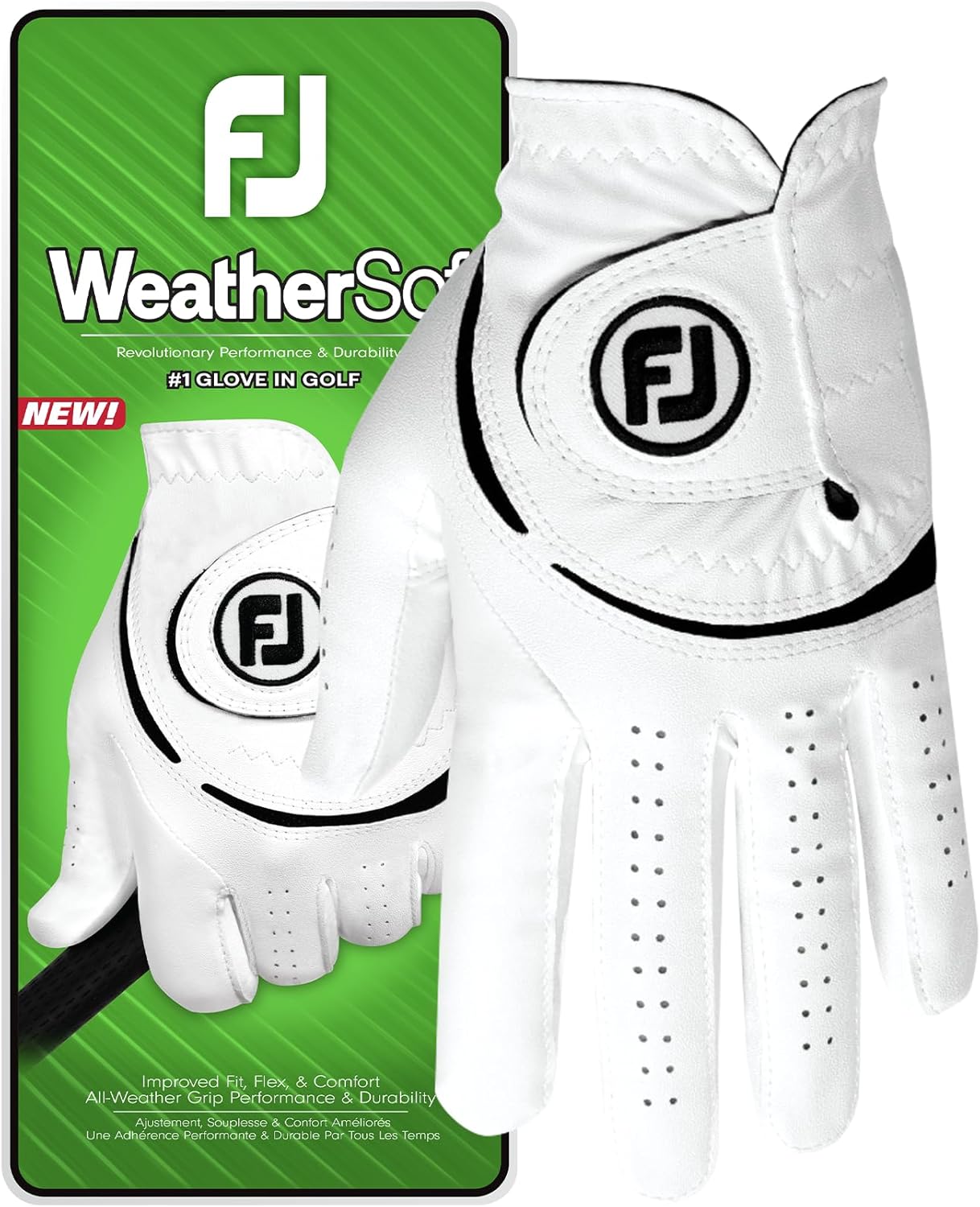
FootJoy WeatherSof
- weight
- 0.05 kg
- material
- Leather / Polyurethane
glovebudget
02

Callaway Opti Fit
- weight
- 0.05 kg
- material
- Synthetic (Japanese synthetic material)
glovemid-range
03
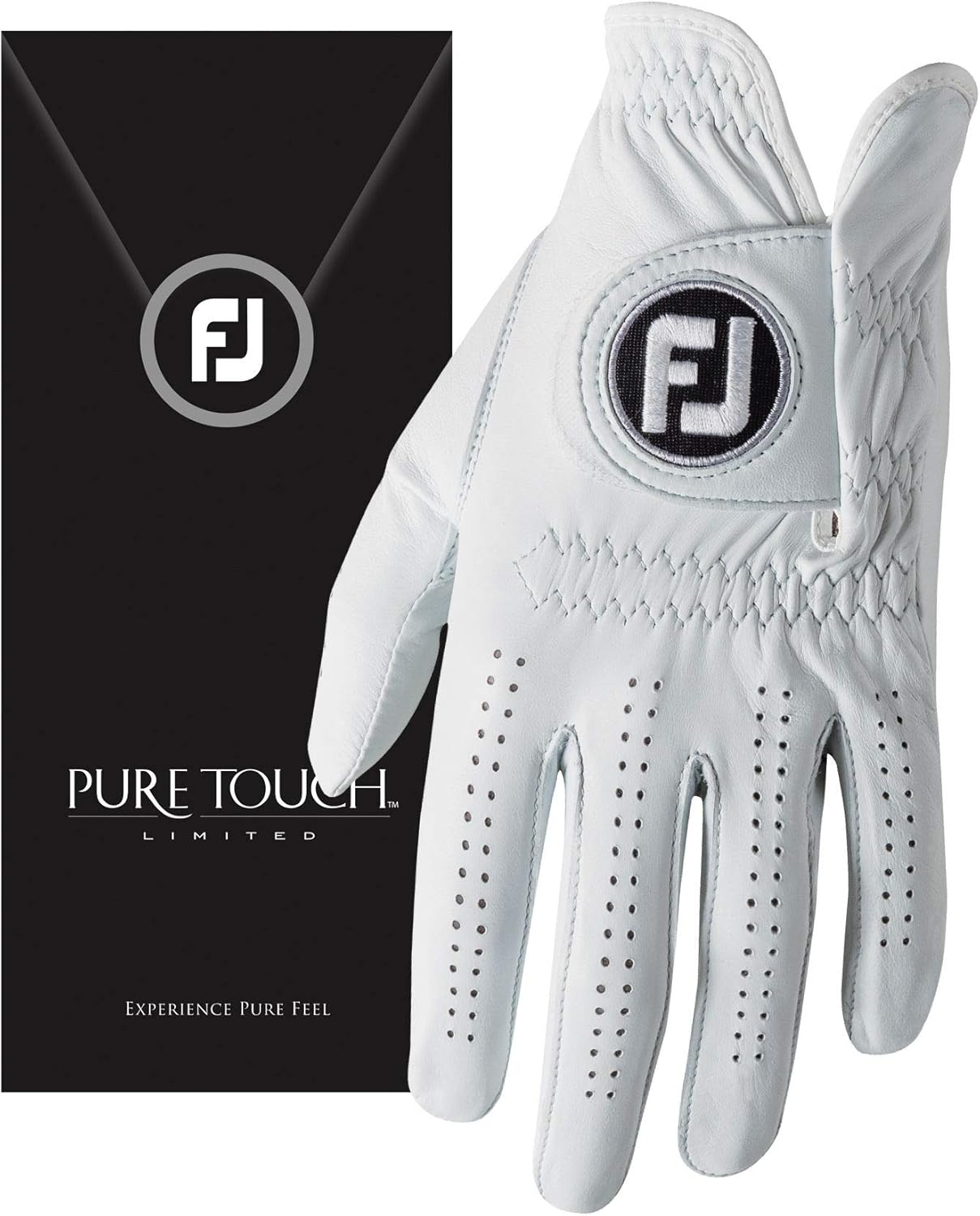
FootJoy Pure Touch Limited
- weight
- 0.05 kg
- material
- Leather
glovepremium
04

TaylorMade Tour Preferred
- weight
- 0.05 kg
- material
- Leather (Cabretta)
glovepremium
Price links coming soon — we're setting up Amazon Associates for this store.
FAQ
Do I need a glove on both hands?
No — one glove on your lead hand (left for a right-handed golfer, right for a left-handed golfer) is standard. The trail hand guides the club but doesn't grip with the same pressure, so a glove on both hands adds unnecessary cost and reduces the direct feel of the grip on your trailing palm.
How long does a cabretta leather glove actually last?
With proper care (air-dry after each round, never stuff it in a bag while wet, avoid machine washing), a pure cabretta glove like the Pure Touch Limited or Tour Preferred lasts 40+ rounds. A synthetic-blend glove like the WeatherSof lasts 20–25 rounds before the PU starts to harden and the grip consistency drops.
Is there a noticeable difference between grain leather and cabretta?
Yes — cabretta is thinner and softer against the skin from the first wear, while grain leather takes a few rounds to break in. Over a full round the cabretta breathes more, so your hand sweats less — but grain leather still grips well and costs meaningfully less, making it the sensible compromise for players who want real leather without the premium price.
Should I buy a more expensive glove if I still lose balls often?
Probably not — the glove's job is grip, not score improvement. If you're still developing your swing and losing several balls a round, a budget synthetic-blend glove (WeatherSof) does the grip job without you worrying about the cost of a premium cabretta glove wearing out in 15–20 rounds because of the way beginners tend to grip and regrip more aggressively.
Can I wear a golf glove in wet weather?
Yes — in fact a glove matters more in the rain, since wet grips are slippery. A leather glove (grain or cabretta) tightens rather than slips when it gets damp, unlike a synthetic glove which can become slippery. Carry a spare glove in a ziplock bag and swap at the turn if the first one is soaked through.
Head-to-head
Callaway Opti Fit vs TaylorMade Tour PreferredFootJoy WeatherSof vs Pure Touch Limited
More guides
Best golf bag for walking the courseGolf starter kit: the minimum you actually needBest golf ball: how to actually pick oneBest golf rangefinder: laser, GPS or both
Try the bag finder →Try the ball finder →Bag & gear glossary →How we choose →