Home / Guides
Best golf rangefinder: laser, GPS or both
The best golf rangefinder matches how you play: a pure laser with tournament-legal slope switch if you mostly play one course (Bushnell Tour V7 Shift), a stabilised model if your hands aren't steady (Nikon Coolshot Pro Stabilized), or a laser-plus-GPS hybrid if you play different courses and want maps in the viewfinder (Garmin Approach Z82).
Any rangefinder worth buying gives you yardage within ±1 yard, which eliminates the guesswork that costs full shots across a round. The difference between models is not precision — all three we picked hit that mark — but how you get that number: straight laser, stabilised laser, or laser combined with GPS data.
The Bushnell Tour V7 Shift is the simplest and most tournament-proven option: point, shoot, get your yardage. Its Slope Switch lets you toggle compensated distances on and off, so you can use it in practice mode (with slope) and then flip it to legal mode for competition without losing the accuracy of the flat reading. At 6x magnification with IPX6 water resistance, it's the rangefinder most tour pros carry — not because it's the flashiest, but because the reading is reliable every single time.
The Nikon Coolshot Pro Stabilized solves a different problem: hand shake. Magnification amplifies every small movement, so a 6x lens also magnifies any tremor by 6x. Nikon's optical stabilisation cancels that out — the image stays steady even if your hands don't, which means you get a clean lock on the pin faster and with fewer re-shots. It's also lighter (210 g) and sits at a mid-range price point, making it the sensible pick for players who want consistent reads without paying for features they won't use.
The Garmin Approach Z82 adds a second data layer: GPS. While a pure laser tells you distance to the pin, the Z82 overlays full-colour CourseView maps inside the viewfinder — you see the shape of the green, the position of hazards, and the yardage to the front, centre and back of the green simultaneously. It also remembers your shot distances and can pair with your phone for stat tracking. The trade-off is battery life (rechargeable, roughly 15 hours) versus a CR2 battery that lasts a season in a pure laser.
Our picks
01
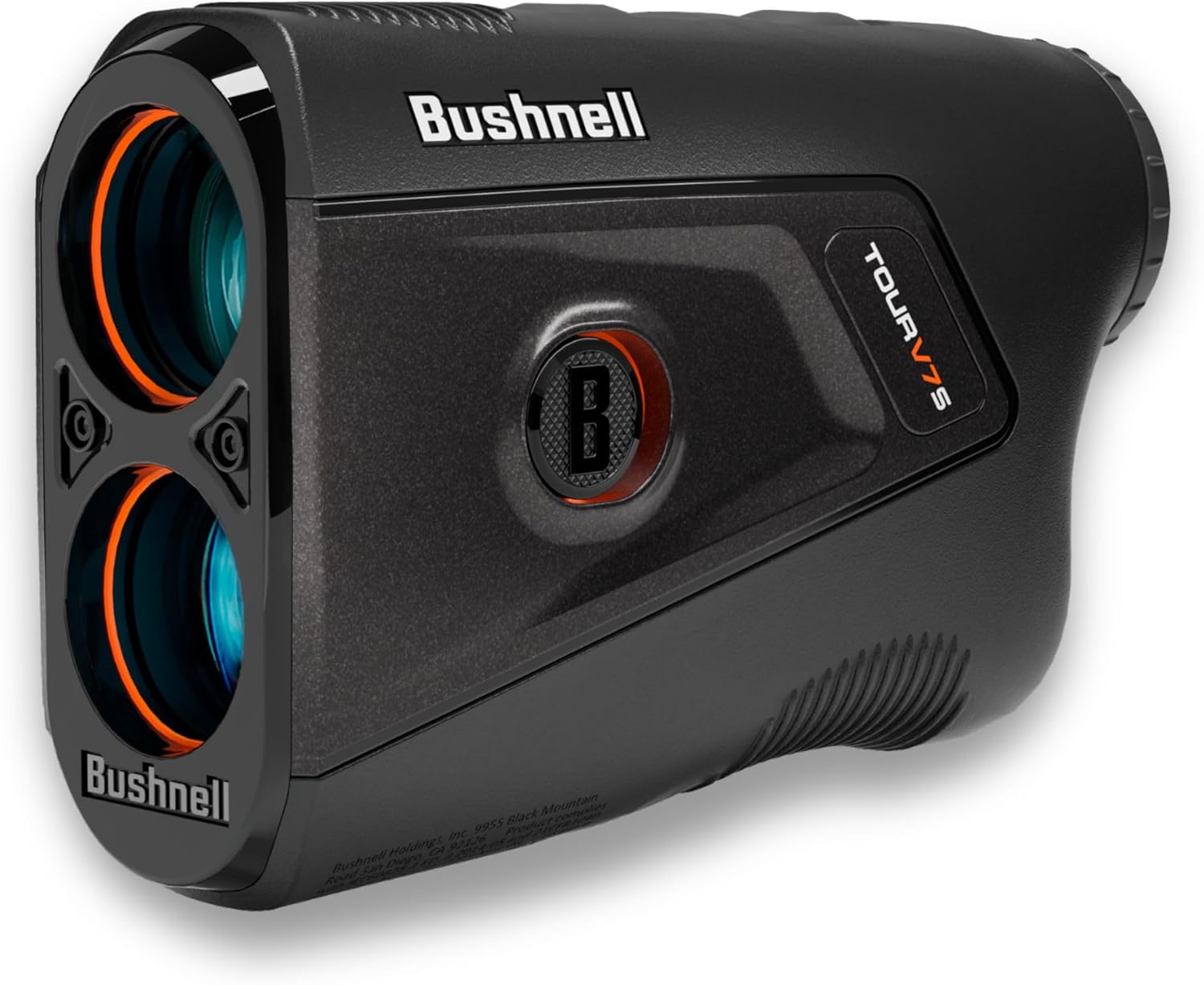
Bushnell Tour V7 Shift
- weight
- 0.255 kg
- material
- Plastic (polycarbonate housing)
rangefinderpremium
02

Nikon Coolshot Pro II Stabilized
- weight
- 0.18 kg
- material
- Plastic (rubber coating)
rangefindermid-range
03
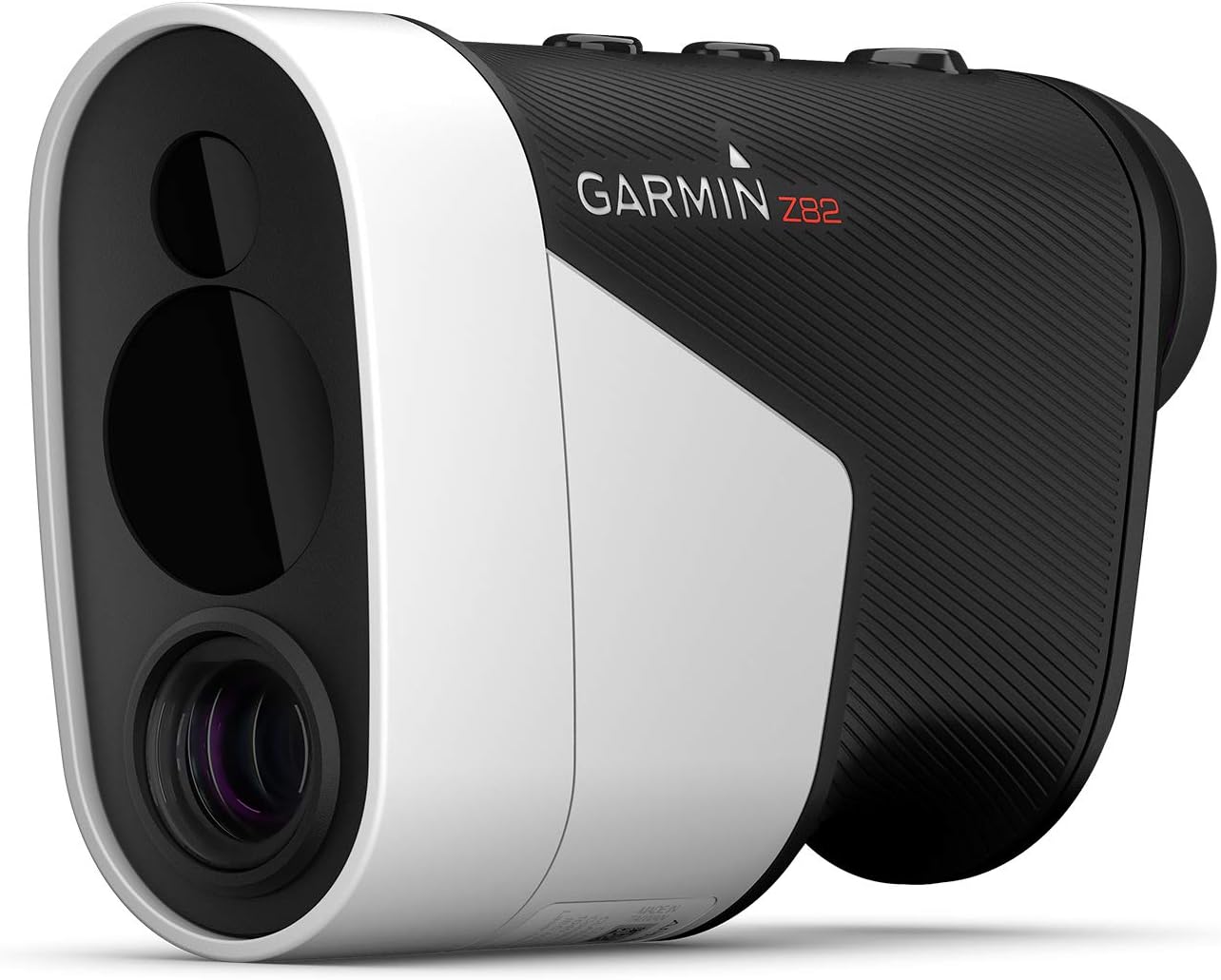
Garmin Approach Z82
- weight
- 0.232 kg
- material
- Plastic (polycarbonate, rubberized grip)
rangefinderpremium
Price links coming soon — we're setting up Amazon Associates for this store.
FAQ
Is a rangefinder legal for tournament play?
Yes — but only without slope compensation active. All three picks here can disable slope: the Bushnell with its Slope Switch, the Nikon with a button hold, and the Garmin through its settings menu. With slope off, they're conforming for any competition that allows distance-measuring devices (most amateur and professional events now do).
Does GPS replace a laser rangefinder?
Not entirely. GPS watches and phone apps give you distance to the centre of the green, but a laser gives you the precise yardage to the pin on that specific day, accounting for pin position. If you're serious about approach shot accuracy, you want laser precision — the GPS is a useful second source, not a full replacement.
Is the Nikon stabilisation worth the extra cost over a basic laser?
If you have steady hands, no — a basic ±1-yard laser does the same job. If your hands shake (coffee, fatigue, cold weather, adrenaline), stabilisation saves you the frustration of re-shooting the same pin three or four times. It's a comfort feature, not an accuracy feature, but for many players comfort is the difference between using it on every shot and leaving it in the bag.
How much should I spend on a golf rangefinder?
A reliable laser rangefinder that gives ±1 yard starts in the low-to-mid range. Spending more gets you features (stabilisation, GPS, better water resistance, slope) but not better raw distance accuracy — once you're within ±1 yard, the spec doesn't improve. Set your budget by which extras you need, not by chasing a tighter precision number.
Head-to-head
Bushnell Tour V7 Shift vs Garmin Approach Z82Bushnell Tour V7 Shift vs Nikon Coolshot Pro StabilizedNikon Coolshot Pro II Stabilized vs Garmin Approach Z82
More guides
Best golf bag for walking the courseGolf starter kit: the minimum you actually needBest golf ball: how to actually pick oneBest golf glove: which material and price band fits your game
Try the bag finder →Try the ball finder →Bag & gear glossary →How we choose →