Home / Guides
Is a rangefinder legal in tournament play? Rule 4.3a(1) explained
A rangefinder is legal in tournament play by default: Rule 4.3a(1) lets you get information on distance or direction, but the device must not measure elevation changes or interpret that information into a recommended line of play or club selection. Slope off, and check the local rules.
Rule 4.3a(1) is the Rule that decides whether the device in your bag comes out of it in a competition, and it draws two lines rather than one. The R&A's own distance-measuring devices page is short enough to read twice: you may get information on distance or direction, such as from a distance-measuring device or compass, but the equipment you use must not measure elevation changes, and must not interpret distance or directional information — such as using the device to get a recommended line of play or club selection based on the location of your ball.
Read the two limits together and the logic is simple. Measuring is allowed; deciding for you is not. Anything that turns a number into a recommendation falls outside the Rule however precise the device is: a laser that reads to the yard is legal, but the same unit picking a club for that yardage is not. That is the Rule's own example, not our reading of it.
The first limit still catches almost everyone who competes, and it is slope. The compensated distance a slope-capable rangefinder shows — the plays-like number that corrects for the ground running uphill or downhill — exists precisely because the device has measured the elevation change between you and the target. In competition it is the flat measurement that counts, so the slope function has to be off: it isn't a preference, it's the difference between a legal reading and a prohibited one.
The GPS layer doesn't change that. The Rule is written around the equipment, not the format, so a device measuring elevation change is measuring elevation change whether the number comes from a laser or from GPS: a plays-like distance on a watch or a phone measures the same thing a slope rangefinder measures. Distance and direction are fine in any form; elevation is not, whatever is doing the measuring.
The second limit is not yours to decide. The same R&A page states that in some competitions the Committee may adopt a Local Rule that prohibits the use of distance-measuring devices altogether. That is a tournament-by-tournament decision rather than a general ban, so the check cannot be assumed: read the local rules or conditions of competition — usually on the notice board or the entry sheet — before the device goes in the bag, and ask the Committee if it isn't stated. The Rules attach a penalty to a breach, and it applies whether or not you knew about the Local Rule.
If you do compete, the spec that matters when you buy is not range or magnification but how clearly the unit shows it's in legal mode — and whether the rest of your group can see it too. The three rangefinders in our catalogue solve that in three different ways, and all three are verified against the manufacturer's own product page.
The Bushnell Tour V7 Shift does it with hardware: a physical Slope-Switch. Bushnell's own product page says the switch lets you use Slope for compensated distances when you want it and gives you a USGA-conforming device that is legal for tournament play when you need it — one press, nothing hidden in a menu, and the switch is visible to anyone in the group. The specs in our catalogue entry (9 oz, IPX6, 6x, CR2 battery) come from that same page. One detail worth knowing before you buy: the V7 Shift also carries Bushnell's LINK-Enabled technology, which the manufacturer describes as giving personalised club recommendations in the rangefinder's display. A club recommendation is exactly the second thing Rule 4.3a(1) lists as not allowed, so that is a function to leave alone in a round played under the Rules — switching slope off does not make it legal.
The Nikon Coolshot Pro II Stabilized takes the software route. Its ID Technology includes an Actual Distance Indicator that shows when the incline and decline function is not in use, so the confirmation is visible rather than buried in a setting. Nikon's published spec sheet lists 6x magnification, a measurement range of 8 to 1,200 yards, accuracy of within 0.75 yards inside 700 yards and a weight of 180 g without the battery, which is why it is also the lightest of the three in our catalogue and the one that disappears into a pocket.
The Garmin Approach Z82 is the laser-plus-GPS option, and that changes what you have to check. Alongside the laser reading it overlays course maps in the viewfinder — front, centre and back distances and hazard positions, which is distance information and therefore allowed — and Garmin specifies a Tournament Mode that confirms the unit is in its legal configuration. Our catalogue entry for the Z82, verified against Garmin's product page when the model was entered, records a laser range of 450 yards, precision of within 10 inches, a 232 g body and IPX7 water resistance. The checking habit is the same as with the other two: confirm the legal mode before the first tee shot, not after a playing partner asks.
Three checks cover the whole Rule before you tee off. First, the number on screen is the flat measurement and not the slope-compensated one. Second, the switch, indicator or mode confirms it. Third, and this is the one players forget, the device isn't offering you a club or a line — switching slope off does not disable a club-recommendation feature, and the Rule prohibits interpreting the information, not just measuring elevation.
None of this means buying twice. Slope has a real use in practice rounds: it teaches you how much an uphill or downhill lie actually changes a shot, which is information you can then carry into competition the legal way, by reading the flat number and making the adjustment yourself. The routine most competitors settle into is exactly that — slope on for practice, off for competition, with the visible confirmation as part of the pre-round check.
We've kept this guide to two kinds of source. The Rule wording, including the allowed and not-allowed list quoted above, comes from the R&A's distance-measuring devices page on randa.org, which is the Rule 4.3a(1) page the Committee applies when deciding whether to prohibit devices by Local Rule. The device details come from each manufacturer's own product page: Bushnell Golf's Tour V7 Shift page for the Slope-Switch and LINK-Enabled descriptions, Nikon's published spec sheet for the Coolshot Pro II Stabilized, and the Garmin page and launch specification for the Z82 as already recorded in our verified catalogue — on this pass Garmin's page returned navigation only and did not load for automated reading, so the Z82 figures rest on what we verified from that same page when the model entered the catalogue, and we say so rather than re-state them as freshly checked. We don't publish a figure we haven't traced to the manufacturer or the Rule itself.
Our picks
01
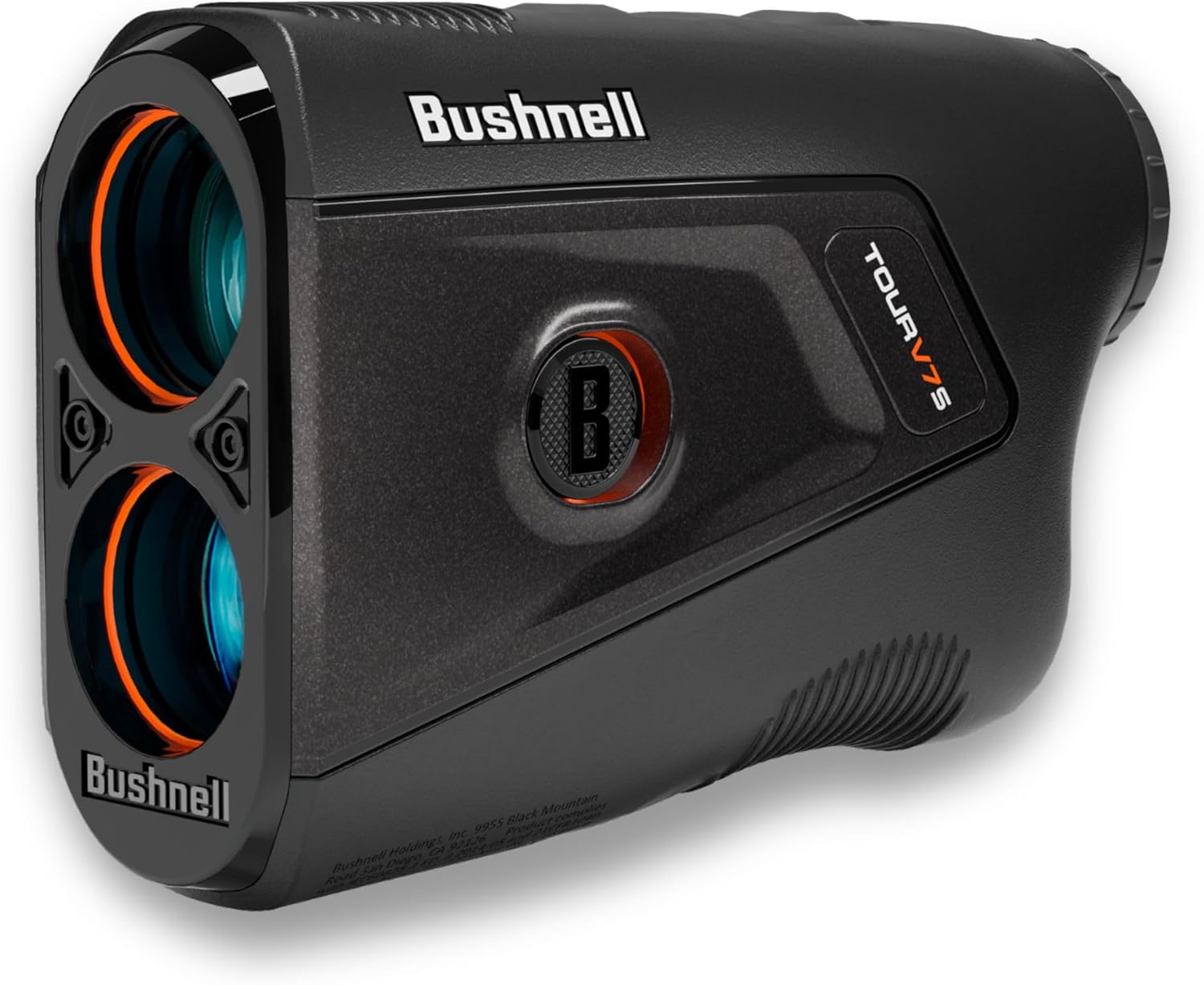
Bushnell Tour V7 Shift
- weight
- 0.255 kg
- material
- Plastic (polycarbonate housing)
rangefinderpremium
02

Nikon Coolshot Pro II Stabilized
- weight
- 0.18 kg
- material
- Plastic (rubber coating)
rangefindermid-range
03
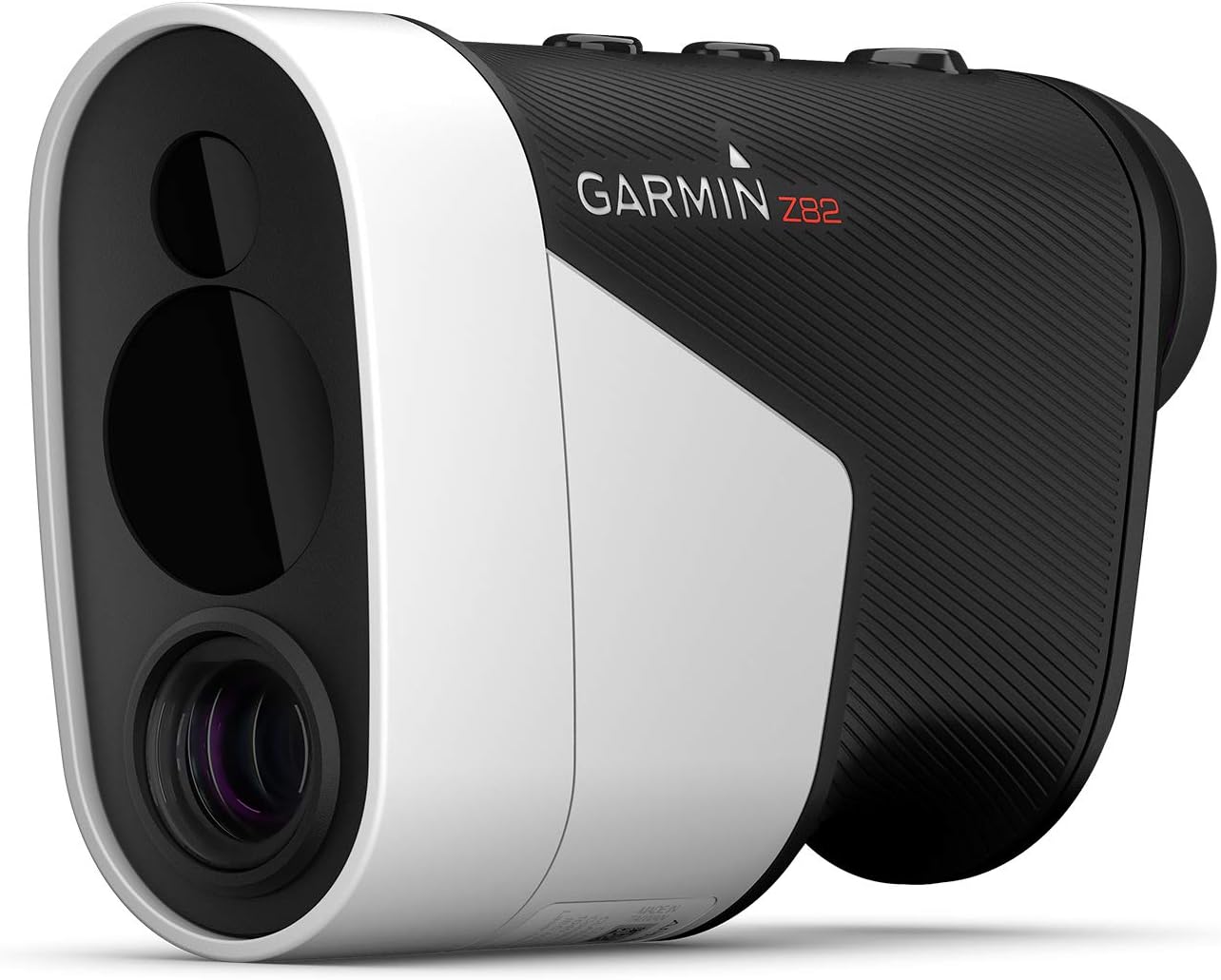
Garmin Approach Z82
- weight
- 0.232 kg
- material
- Plastic (polycarbonate, rubberized grip)
rangefinderpremium
Price links coming soon — we're setting up Amazon Associates for this store.
FAQ
Is a rangefinder legal in tournament play?
By default, yes: Rule 4.3a(1) allows you to get information on distance or direction. The catch is that the Committee can adopt a Local Rule prohibiting distance-measuring devices altogether, so this is a per-competition decision rather than a general ban — read the local rules or conditions of competition, and ask the Committee if they don't say.
Why can't I use slope in competition?
Because a slope-compensated distance is a measurement of elevation change: the device has to know how far the ground rises or falls to produce a plays-like number. Rule 4.3a(1) lists measuring elevation changes as not allowed, so in competition the flat distance is the reading that counts, whatever form the device takes.
Can I use a phone app as my rangefinder?
The Rule is written around the equipment rather than the format: distance and direction are allowed, measuring elevation changes and interpreting the information are not, whether the number comes from a laser, a GPS watch or a phone. And because an app is still a distance-measuring device, a Local Rule prohibiting them in a competition covers a phone as much as a rangefinder.
Do I need a second rangefinder for competitions?
No, if yours can switch the slope function off with a confirmation you can see. The Bushnell Tour V7 Shift uses a physical Slope-Switch, the Nikon Coolshot Pro II Stabilized shows its Actual Distance Indicator when the incline and decline function is not in use, and the Garmin Approach Z82 has a Tournament Mode. One device, two modes — practice and competition.
What is still banned once slope is switched off?
Interpreting distance or directional information: Rule 4.3a(1) gives a recommended line of play or a club selection as its example of that, and it applies in addition to the ban on measuring elevation. So a club-recommendation feature stays out of a competition round even with the slope function switched off.
Head-to-head
Bushnell Tour V7 Shift vs Garmin Approach Z82Bushnell Tour V7 Shift vs Nikon Coolshot Pro StabilizedNikon Coolshot Pro II Stabilized vs Garmin Approach Z82
More guides
Best golf bag for walking the courseGolf starter kit: the minimum you actually needBest golf ball: how to actually pick oneBest golf rangefinder: laser, GPS or both
Try the bag finder →Try the ball finder →Bag & gear glossary →How we choose →